
Steel meets the highest standards for civic and industrial works
Why use steel in civic and industrial?
The world’s population is projected to increase steadily in the future, reaching 9.8 billion by 2050. This rise will be accompanied by rapid urbanisation. As the need for new buildings and infrastructure continues to grow worldwide, cutting emissions and consumption of natural resources will be crucial for sustainability.
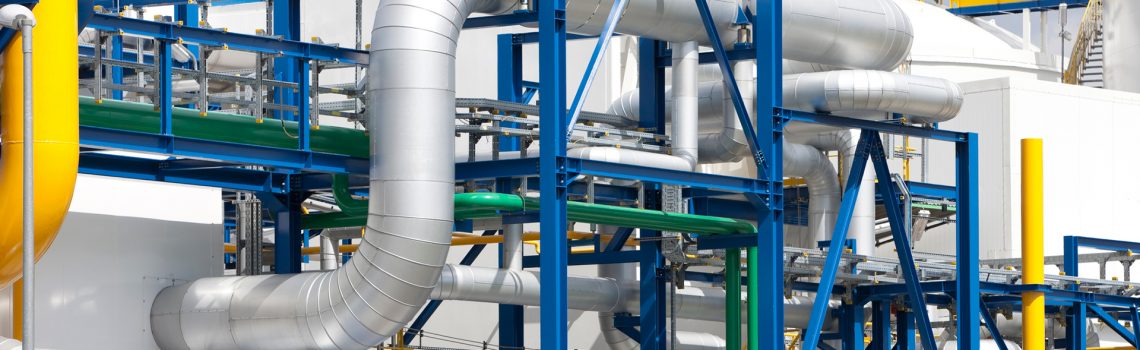
However, new buildings must still be able to meet high standards, particularly those for civic and industrial use. That’s why health and education buildings will rely on the properties of steel, as well as construction on workshops, factories, distribution warehouses, retail or leisure complexes.
Efficient
The time available for construction of new educational buildings is often very short, typically just 14 months for university buildings and 12 months for school buildings. The use of prefabricated components means that construction periods can conform to the academic year (July of one year to August of the next).
Flexible
Single story buildings, known as ‘sheds’, can vary in size from small workshops of just a few hundred square metres up to massive distribution warehouses covering more than 100,000m2. Steel can be deployed easily in small- and large-scale building projects of this kind.
Meanwhile, health buildings find long-span steel construction highly advantageous because it can be used to create column-free space and also allow internal partitions, often made of light steel, to be configured on the floor plan to meet current and future needs.
Effective integration of services is important to the design of educational buildings. Perforated (or cellular) long-span beams provide for freedom of service distribution to meet a range of building functions. Shallow floor systems also provide flexibility in service distribution.
Sustainable
Steel construction is produced efficiently, waste is minimised, and steel can be reused and recycled multiple times without deteriorating over time. The sustainability attributes of steel construction enable health buildings to achieve the highest BREEAM ratings. Meanwhile, steel in single storey buildings can be disassembled and the steel potentially reused in other structures – a key feature of the circular economy.
You may also like

World’s longest suspension bridge will connect Europe and Asia
Scheduled to open in 2023, the Canakkale 1915 bridge will be a steel-built infrastructure first, spanning the Dardanelles strait that separates the European and Asian continents.

Liverpool University Hospital will revitalise city centre
Structural steelwork is playing a crucial role in the redevelopment of one of the largest hospitals in the north of England, a building that also represents a regeneration of an area in Liverpool city centre.
The construction innovations powering Crossrail’s ambition
Slated to open some time between October 2020 and March 2021, Crossrail is an ambitious project to develop a new railway – called the Elizabeth line – that represents the largest current infrastructure development in Europe.
worldsteel or any third party contracted to write on worldsteel's behalf shall not be liable nor held responsible for the content of the material published in our website, which is strictly based on the information provided by the companies. The information contained in this website does not imply that worldsteel or any third party contracted by worldsteel has endorsed or approved it, and it reflects solely the views of the company providing the information. worldsteel shall not be held liable for any damages or losses resulting from the access or use of the content published in our website.